
Author: Dinesh Silva

Dilmah Named to SIAL Innovation Selection and Shortlisted as a Top 5 SIAL For Change Finalist Ahead of SIAL Paris 2026
COLOMBO, Sri Lanka – Dilmah today confirmed an exciting double recognition ahead of SIAL Paris 2026 (17–21 October 2026, Paris Nord Villepinte). Three Dilmah innovations have been named to the SIAL Innovation Paris 2026 Selection, and Dilmah has separately been confirmed as one of just five global finalists in the Large Companies category of ‘SIAL For Change’, a new 2026 competition recognising sustainability and social responsibility across the agri-food industry. The three innovations named to the SIAL Innovation Paris 2026 Selection are: Selection is awarded by an independent jury of international food-industry experts for originality, technical innovation and sustainability impact and selected products are showcased in the dedicated SIAL Innovation Area. “This recognition from SIAL, one of the world’s most respected food and sustainability platforms, reflects a philosophy my father built more than four decades ago- that genuine innovation and genuine sustainability are the same pursuit, and that a business should exist to serve people and protect nature, not merely to profit from them. Being named among just five large companies worldwide, out of 226 entries, alongside the selection of three of our products for their innovation, is recognition of that pursuit across every part of our business.”, says Dilhan C. Fernando, Chairman, Dilmah Dilmah’s SIAL For Change finalist status recognises the model behind the MJF Charitable Foundation (established 2002) and Dilmah Conservation (established 2007), which channels 15% of the company’s pre-tax profit into community welfare and environmental protection. The competition drew 226 entries worldwide, narrowed to 122 eligible applications, from which just five large companies and fifteen SMEs were selected as finalists. Winners of both competitions will be announced at SIAL Paris’s official Awards Ceremonies on 17 and 18 October 2026. For further information, please contact: hospitality@dilmahtea.com

Dilmah Announces the Unveiling of Dilmah Urban Estate, Elevating and Reimagining the Ceylon Tea
COLOMBO, SRI LANKA September 6, 2026 Dilmah, the globally renowned family tea company celebrated for its commitment to uncompromised quality and ethical practices, today announced the unveiling of Dilmah Urban Estate, a complete reimagining of their space located at One Galle Face Mall Front (L 1-20, No. lA Galle Rd, Colombo 02). Officially opening to the public on September 7, 2026, this newly trans-formed destination marks a celebration of deep tea-growing roots and an elegant evolution into a complete dining and retail experience. Dilmah Urban Estate serves as a culinary sanctuary that reimagines traditional tea culture by fusing modernist sophistication with the rich heritage of terroir and provenance. Within this space, the authentic estate-to-cup philosophy is brought to life; the journey of every leaf is honored through a seamless transition from the high-land fields directly to the cup, and gracefully onto the plate. The reimagined destination blends authentic island heritage with refined gastronomy, offering a curated menu that brings the quiet passion of the growers directly to the senses through a sophisticated and immersive restaurant setting. Inspired by the journey of tea, the estate’s design draws from the humble elegance of the tea factory, the swirl of the tea fields, and the artisanship embedded in every step of the craft. Just as the tea plant thrives in varying conditions of light and warmth, the venue is designed to nurture the human experience. The reimagined destination promises a multi-sensory adventure throughout the day, featuring a menu meticu-lously curated to highlight tea as both an ingredient and an inspiration. From rare single-estate brews and com-forting warm cuppas to invigorating iced teas, craft t-mocktails, and tactfully elevated tea cocktails, the space caters to every palate alongside carefully curated tea retail selections. Designed as the foundation of a broader global narrative, the Colombo flagship anchors a vision to expand this uniquely rooted dining concept across international markets, beginning with Malaysia. Following an exclusive private preview on September 6, 2026, Dilmah Urban Estate opens its doors to the public starting September 7, 2026. Patrons and tea enthusiasts alike witness the next chapter in Dilmah’s storied journey, experiencing true tea luxury across every carefully crafted plate and spirited infusion. About Dilmah: Founded by Merrill J. Fernando in 1988, Dilmah is a truly ethical, family-owned tea company committed to offering the finest Ceylon Tea, garden fresh and 100% unblended. With a unique philosophy of “packaging at source,” Dilmah ensures freshness, taste, and the integrity of its tea while directly benefiting the tea growers and their communities through its humanitarian initiatives, ensuring that business is a matter of human service. theurbanestate.com Dilmah Urban Estate @One Galle FaceLI – 20 , One Galle Face Mall,No.IA, Centre Road , Colombo 002 +9477 282 2001

Wealth, Not Treasure. Rethinking Wealth Creation, from indifference to collaboration
Address by Dilhan C. Fernando at the UN Global Compact Leaders Summit In 1962, a marine biologist named Rachel Carson looked at the world we were building and warned: “We stand now where two roads diverge. The road we have long been traveling is deceptively easy, a smooth superhighway on which we progress with great speed, but at its end lies disaster. The other fork — the one less traveled by — offers our last, our only chance to reach a destination that assures the preservation of the earth.” She was writing about pesticides but also warning us of a falsehood – the belief that we could take, endlessly, from people and nature, and never have to pay the cost. Forty-two years later, law professor Joel Bakan – Rhodes Scholar and graduate of Oxford and Harvard, looked at the institution built to do the taking. He described the modern corporation as being “singularly self-interested and unable to feel genuine concern for others in any context,” compelled by design to externalize every cost it can. Carson warned us about the taking. Bakan warned us about the structure built to take without limit. In 2006, former Chief Economist of the World Bank, Nicholas Stern connected both: in his Review on the Economics of Climate Change he called it “the greatest market failure the world has ever seen,” evidencing – as an economist – that acting to avoid the worst impacts of climate change would cost roughly one percent of global output, while failing to act would cost nearly twenty percent. Here is the irony behind that; our economy prices what is scarce and easy to extract, and calls what sustains all of us — clean air, fresh water, stable soil, medicine born of the natural biochemistry of a rainforest — a free input. Adam Smith knew it as the diamond – water paradox – diamonds, considered precious and priced accordingly yet utterly useless for staying alive, and water – essential for life yet priced at an insignificant level. Least value attached to what is most important. I am a tea grower. I and every other farmer knows the truth Rachel Carson alluded to – nature keeps her accounts. What we call “externalities” she calls debt. That debt is now tragically overdrawn, manifest in a massive yet avoidable cost to humanity. In 2025, more than 240,000 people were killed in armed conflict worldwide. In that same year, at least 16,600 people were killed directly by weather and climate disasters. Heat alone kills an estimated 546,000 people every single year, according to the Lancet Countdown on Health and Climate Change. Nearly 7,900 people died or vanished on migration routes last year, most of them fleeing drought, floods, and conflict. Conflict. Climate. Displacement – one crisis wearing three faces — the confrontation between a world that has failed to price what is important – people and nature, and the compounded cost of that failure. There is a fourth which rarely generates the same alarm because its impact is slow. More than 1.2 billion people now live with a diagnosed mental health condition — a ninety-five percent increase since 1990. Chronic loneliness alone now linked to 871,000 deaths a year. In business we judge plans by their results, not intentions. Last month, floods in Nepal killed more than 1,300 people, in a disaster its own Prime Minister said there was “no doubt” climate change had driven. In the same weeks, the FAO’s Food Price Index hit its highest level since 2022, pushed up by the same climate shocks. Any plan producing these results — rising conflict, unstable climate, collapsing food system, and a population growing sicker, lonelier, and more anxious — would have been thrown out a decade ago if there was an honest assessment. For most of us in this room, these are statistics — insurmountable, but unlikely to be endured directly. For my family and for farmers who grow the world’s food, they are our daily reality: drought, floods, conflict. And onto that reality something entirely of our own making yet so devastating to livelihoods, soils and biodiversity — discount culture and a middleman’s profit vastly disproportionate to anything we as producer could ever hope to derive. We are on the frontlines of our collective battle for survival, and yet hamstrung in our response by a global fascination for cheap food. Logically, that pushes most growers toward compromise — soils, wages, the produce itself — a spiral of decline that begins with the loss of taste, nutrients and goodness, ending in disaster, for consumers and growers alike. And this confrontation is not new. For centuries the powerful have called their extraction of other people and lands “progress.” The vocabulary changed — “civilized” became “developed,” “savage” became “underdeveloped” — but the hierarchy, and the extraction, persisted. I grow tea on land cleared under exactly that justification. The question is this – progress for whom, at whose cost, measured by whose values? Business as usual, in that environment, is slow-motion self-destruction. Every input a company depends on — stable climate, secure water, functioning supply chains, a workforce with enough security to turn up — is degrading. A business treating sustainability as a cost while the ground beneath it erodes, mistakes survival for expense. That belongs to the private sector as urgently as to any government. Managing the existential crisis we are in is a specialised craft, not a popularity contest; winning an election is no guarantee of the suitability of a government to handle such complex and severe challenges. Hence the role of business in initiating collaboration with academia, NGOs and government. So where do we begin? Everything we do from here must start with a single question: what are we actually trying to achieve? That is where economics itself began, long before Adam Smith. Over two thousand years earlier Aristotle laid the philosophical ground, distinguishing an item’s use value — what it is worth to whoever holds it — from its exchange value, what it fetches in trade. Smith himself, in 1776, gave us the invisible hand, free markets, and the division of labour — but he asked why nations prosper, not how to maximise a shareholder’s return this quarter. Ricardo asked how wealth is distributed. Mill asked how prosperity could improve society. The modern caricature of economics as simply about money would have surprised every one of them: they were concerned with prosperity rather than treasure, human welfare rather than output alone, the public good rather than private enrichment. None of them intended the system we now operate to behave the way it does. None designed a machine for externalising cost onto the voiceless and unborn generations — we built that ourselves, and mistook it for growth. We made a mistake, but it is now costing humanity its margin for survival. Correcting it will come from the same instinct that animated Aristotle, Smith, and Mill — leadership guided by evidence, not to plead for better behaviour inside broken markets, but to design markets that enable action. Last year, Nicholas Stern returned – 20 years on. In ‘The Growth Story of the 21st Century’, he writes that we can “forge a new path for economic development” that breaks the destructive relationship between production, consumption, and the environment, delivering “a much more attractive structure for growth and development, with rising living standards across all dimensions.” Not sacrifice but opportunity — the greatest of our century. UCL Professor Mariana Mazzucato, in The Common Good Economy, explains why the opportunity sits unclaimed: economics has always treated “the good” as something to patch around the edges of the market, rather than something to build the economy around from the outset. I know this can be done at the level of one company. My father, who could not afford a university education, built our family business on the conviction that kindness should define a business as much as an individual — “business as a matter of human service”. He challenged a century of economic colonialism in tea, and turning that conviction into a structural rule in 2003: a minimum of fifteen percent of our pre-tax profit, every year, to fulfill a promise of kindness via our MJF Charitable Foundation and Dilmah Conservation. In Sri Lanka’s Eastern Province that structure funds Harvest², pairing smallholder farmers on fair-price contracts with mothers’ cooking cooperatives that supply daily meals in its first phase – to more than 2,700 children daily across twenty-three schools, with environmental education through school gardens teaching the next generation what the land they depend on actually needs. I have to be honest about the limit of that story: one company proving a point does not change a market. A single business can absorb the cost of a fair wage, and still be undercut by a competitor that externalises the same cost. Richard and Martha Anker, whose Living Wage methodology is the global standard for measuring this, put it plainly in their report on Sri Lanka’s tea estates: “most Third World exporters have a limited ability to raise wages to a living wage… participation of the entire value chain is required.” This cannot stay a story about a few kind businesses – it has to become the standard, reshaped collectively. That is what the accelerators in this room exist to do: turn one company’s proof of concept into a benchmark for a category. The Climate Ambition Accelerator evolves a wish to decarbonise into a shared, measurable outcome. Target Gender Equality moves women into leadership across whole sectors. This is systemic change built the only pragmatic way it ever has been — one business proving it possible, a coalition collaborating to make it normal. The economists who built our current model made an error at the very foundation of the discipline: they treated nature — finite, fragile, keeping careful accounts — as though it were infinite and free. Land, water, air, biodiversity: inputs, not capital. That single error, compounding for two centuries, is the root of everything else in this speech. Correcting it is a design task, not a plea for conscience: a market that prices nature at zero will keep producing this outcome no matter who is running it. A market designed to enable the right action produces a different outcome by default. You can see the alternative on any high street, any app, any Black Friday. Everyday Low Price built retail empires on the promise that price could fall forever with no fall anywhere else. Black Friday now spills across a week; Singles’ Day can move more merchandise through one platform in a day than many nations produce in a year. A hard discount, traced through its supply chain, is rarely a triumph of efficiency — it is a cost simply moved: onto the grower, onto the river that absorbs what the factory cannot treat, onto the worker whose wage is easiest to cut. Someone always pays for the discount — because a price that excludes its true cost is not low. It is deferred, with interest, onto people and nature who never agreed to the loan. What remains is the only thing that was ever going to be hard: collaboration built more for resilience than applause — a coalition that treats mitigation and adaptation as one project, designs markets that enable action instead of merely tolerating it, and invests in supply chains built to still exist in twenty years. There is no third road on which that cost disappears. There is only the choice of who pays it, and when. The deepest failure in all of this is not economic. A misinterpretation of economic theory has dehumanised business — reduced people to line items in quarterly accounts, and line items into a reason not to look at the people. We must never forget our humanity. Fair pricing is not charity to a grower; it is capital. Pair a price that aligns with value, together with access to knowledge, quality systems, and support in climate adaptation and regulatory compliance, and a farmer stops being a cost in someone else’s supply chain. Instead that farmer becomes a partner capable of the work that regulations alone cannot achieve — restoring soil, protecting biodiversity, securing a rural livelihood, educating the generation that will inherit the land. That is how the world closes the twelve trillion dollars its agrifood systems lose every year to hidden health, environmental, and economic damage: not through a subsidy line in a government budget, but through millions of growers equipped and enabled to be the agents for change they have always had the knowledge and commitment to be. Enable the producer, and you do not just fix a supply chain. You recruit the largest workforce already standing on the ground where this crisis is happening. Please look at these faces — people I met two weeks ago amongst the 2,500 beneficiaries of our small entrepreneur programme – rebuilding livelihoods with their own hands. With commitment, capability, and in many cases, passion. And they know their lives depend on it. People. Wherever conflict grows, the climate warms, and extreme weather outpaces people’s patience in a spiral of decline. Profit will move, as it always does but it is people — those already born, and the many not yet born — who matter more than any figure on a balance sheet. That is the humanity economics was built to serve, and the one we must never again mistake for an externality. Let’s end the indifference to the people who make our food to respectful collaboration and build instead a relationship of respectful collaboration, for humane progress. with humanity. Thank you. Dilhan C. FernandoChairman, Dilmah Ceylon Tea Company PLC and Kahawatte Plantations PLC | Doctor of Business, honoris causa. Edith Cowan University, Chairman, Global Compact Network Sri Lanka & Biodiversity Sri Lank
14 Second Chances: Why is a Tea Brand Caring for Elephants?
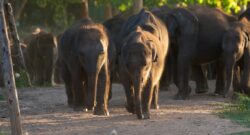
At the Elephant Transit Home in Udawalawe, feeding time looks a little like chaos and a lot like joy. Every three hours, a group of orphaned calves comes trotting out of the forest edge, ears flapping, trunks reaching, jostling each other for a place at the milk line. Keepers move calmly among them, pouring warm milk formula through tubes and funnels while the calves drink with the kind of urgency only a baby animal can manage. Visitors watch from a respectful distance, behind a rustic rail, in complete silence broken only by trumpeting and the occasional splash. It is, by any measure, an ordinary afternoon at the Home. It is also one of the most quietly remarkable conservation stories in Sri Lanka – and one that Dilmah has been part of for close to two decades. Today, Dilmah sponsors the care of 14 rescued baby elephants at the Elephant Transit Home, as part of Dilmah Conservation’s commitment to biodiversity protection. Full, current details of the elephants under our care can always be found on the Dilmah Conservation website (https://www.dilmahconservation.org). Why the Elephant? Sri Lanka’s relationship with the elephant is older than its recorded history. The animal appears in temple carvings and royal chronicles, leads the Kandy Esala Perahera each year bearing the sacred relic of the Tooth of the Buddha, and lives in local folklore as a symbol of memory, patience and quiet strength. To harm an elephant, in the old telling, was to invite consequence; to protect one was to earn merit. That reverence has not disappeared – it has simply had to coexist with a modern, fast-developing island where land is scarcer than it has ever been. But the elephant’s importance is not only symbolic. Elephants are what ecologists call a keystone species – their daily lives quite literally build the ecosystems around them. A single elephant can disperse the seeds of dozens of plant species across many kilometres in a single day, regenerating forest as it walks. Their trails become waterways in the dry season. The clearings they create in dense undergrowth become grazing ground for deer, sambar and other herbivores, which in turn sustain the leopards above them in the food chain. Remove the elephant, and Sri Lanka’s dry-zone forests and grasslands – the very landscapes that shape the island’s rainfall, its rivers, and its tea-growing highlands beyond them – begin to unravel in ways felt long after the animal itself is gone. And yet Sri Lanka’s elephants are under serious pressure. As agricultural land and human settlements have expanded into traditional elephant corridors, human-elephant conflict has become one of the country’s most painful conservation challenges, claiming both human and elephant lives every year. Calves are frequently the first casualties – orphaned when their mothers are killed or fatally injured, too young to survive alone in the wild. A Cause that Found Us, not the Other Way Around Dilmah’s purpose has never been separate from its business. Since Merrill J. Fernando founded the company on the belief that “business is a matter of human service,” Dilmah has treated the land, the communities, and the biodiversity of Sri Lanka as things to be protected, not simply used. Tea itself is grown in landscapes elephants have shaped for millennia. Supporting their survival was never a marketing decision – it was an extension of the same philosophy that built the MJF Charitable Foundation and Dilmah Conservation: that a business rooted in a place carries a responsibility to that place, in full. That is why elephant conservation sits inside our purpose and kindness pillar alongside our work with children, tea communities, and the wider natural world – different expressions of the same idea, that kindness is something a business can practice deliberately, not just profess. What that Commitment has Looked Like, in Practice Feeding and nurturing: Orphaned calves arrive at the Elephant Transit Home frightened, malnourished, and sometimes injured. Dilmah’s significant sponsorship helps fund their care from that first day – specially formulated milk, veterinary attention, and the patient, minimal-contact approach that keeps them wild at heart even as they are nursed back to health. The Home’s philosophy is deliberate: keepers feed and monitor the calves, but do not tame them, because every calf raised here is meant to return to the forest, not to a life among people. Rewilding: The entire purpose of the Elephant Transit Home is release, not retention – and it has become the most successful elephant reintroduction programme of its kind anywhere in the world, with well over 200 calves cared for and returned to the wild since 1995. Dilmah-sponsored elephants have gone through this journey themselves. Ted, one of the first calves Dilmah sponsored, was among the very first group selected for the Home’s soft-release programme in 2019 – a gradual reintroduction designed to ease the transition back to forest life – and was released into Udawalawe National Park in 2020, monitored afterwards to confirm he had settled well into a wild herd. The elephant walk at the Transit Home: For visitors – including guests of Dilmah’s Resplendent Ceylon resorts, for whom a visit to the Home can be arranged as part of their stay – feeding time is the closest most people will ever come to these animals, and it is designed to stay that way. There is no touching, no riding, no posing for photographs. Visitors simply watch, from a distance, as calves of all ages and personalities come bounding in for their milk. It is an experience built around respect rather than spectacle, and it has quietly taught thousands of visitors what ethical wildlife tourism can look like. Infrastructure upgrades: Good intentions need good facilities behind them. Dilmah Conservation has funded renovations at the Elephant Transit Home, established and equipped a dedicated Information Centre so visitors can learn about the threats elephants face, and installed solar water heating and water filtration systems with UV sterilisation to make the Home’s daily operations more sustainable and less costly to run. Continuous stewardship and advocacy: Sponsorship, for Dilmah, has never been a one-time gesture. Our support of the Elephant Transit Home has continued year after year, alongside broader work with the Department of Wildlife Conservation and the Centre for Conservation and Research – including radio-collaring studies that help scientists understand how released elephants move, settle and thrive once they return to the wild. It is research that quietly strengthens the case for protecting elephant habitat across the island, long after any individual calf has grown up and moved on. Fourteen Calves, One Promise Every one of the 14 calves currently in our care arrived at the Elephant Transit Home because something went wrong – a mother lost, a herd scattered, an encounter with humans that no calf should have to survive alone. What happens next is entirely within our power to shape. A warm bottle of milk. A safe place to grow. A slow, careful walk back into the wild, monitored and protected until they no longer need us at all. That, in the end, is what kindness looks like when it is put into practice rather than simply spoken about – patient, unglamorous, and consistent, calf after calf, year after year. To learn more about the elephants currently under Dilmah’s care, or to find out how you can support the Elephant Transit Home, visit [dilmahconservation.org] (https://www.dilmahconservation.org).

Beyond the Cup: How the Dilmah School of Tea Inspires Hospitality Leaders to Reimagine Guest Experience and Revenue Growth
Luxury is no longer defined by opulence alone. Today’s guest seeks experiences that transcend beyond just plush, to those that are immersive, authentic and memorable. Trends and evidence suggest that guests seek stories rather than products, and value craftsmanship over commoditization. Globally, we find them increasingly drawn towards brands that demonstrate purpose, sustainability and ethical business practices. This shift is redefining how hospitality is both designed and perceived. Across hotels, resorts and restaurants around the world, exceptional service, premium amenities and beautiful spaces have become an expected normal. What truly differentiates a property today is its ability to create meaningful experiences that guests remember, share and return for. This philosophy has been the core of the Dilmah School of Tea, ever since its inception in 2009. Over 95 editions, the School of Tea has welcomed thousands of hospitality professionals from around the world, including General Managers, Executive Chefs, Food & Beverage Directors and hospitality entrepreneurs. While tea remains at its heart, the programme has evolved into something much bigger; an innovation platform that challenges hospitality leaders to rethink how experiences are created, delivered and monetized, and one of the most common perceptions it challenges is that tea is simply a beverage. Instead, at the Dilmah School of Tea, participants discover tea as a platform for storytelling, gastronomy, wellness, sustainability and bespoke guest engagement. More importantly, they discover its unexpected potential as a driver of revenue-growing differentiation. From Beverage to ExperienceConsider wine. Over time, what was once considered a mere beverage has now transformed into an experience through tastings, pairings and storytelling. Coffee has followed a similar journey, with provenance and craftsmanship becoming central to its appeal. Tea presents a similar if not more lucrative opportunity, and whilst containing an incredible wealth of value to its drinker, this universe of possibly has remained untapped. Forward-thinking hospitality operators are increasingly using tea to elevate guest experiences across multiple touchpoints. Tea-inspired breakfasts, tea gastronomy, tea and food pairings, tea mixology programmes and wellness rituals are creating new ways to engage guests while enhancing perceived value and an understanding of the potent powers of tea. These concepts are not designed simply to increase tea consumption. They are designed to create memorable experiences that encourage longer engagement, stronger loyalty and greater guest spend. In an increasingly competitive marketplace, that distinction matters. Responding to the Ask of the Modern Luxury TravellerToday’s luxury traveller is more conscious than ever before. Guests want to know where products come from, how they are produced and what impact they create. They seek authenticity, provenance and purpose. Tea naturally provides a powerful platform for delivering these expectations. From the story of the tea garden and the craftsmanship of tea makers to ethical sourcing and environmental stewardship, tea introduces a narrative that enriches the guest experience. When storytelling is combined with thoughtful presentation and service rituals, a simple cup of tea becomes something far more meaningful, it becomes a moment worthy of memory. A Foundation Built on PurposeThe Dilmah School of Tea’s uniqueness is in its offering beyond mere hospitality innovation. Participants are introduced to the philosophy that has guided Dilmah since its inception: business as a matter of human service. Through exposure to the work of the MJF Charitable Foundation and Dilmah Conservation, hospitality professionals the world over witness a demonstration of how commercial success can create immeasurable positive impact for people and nature. At a time when guests increasingly support brands that align with their values, this connection between purpose and hospitality has never been more relevant. Looking AheadAs guest expectations continue to evolve, hospitality leaders must look beyond traditional definitions of luxury and focus on creating magic that inspires, engages and connects. Over the past 17 years, the Dilmah School of Tea has proved that tea is far more than a beverage; it is a catalyst for innovation, a platform for storytelling and a driver of commercial growth. Because the future of hospitality will not be defined by who serves the best product. It will be defined by who creates the most meaningful experience. And sometimes, that opportunity begins with something as simple as a cup of tea.

Fulfilling our Founding Principles – Dilmah in 2025
A challenging year in 2025 did not deter us from fulfilling our founding principles that make every cup of Dilmah a cup of kindness. We celebrated our 40th anniversary knowing that we supported 670,000 less fortunate people. We hosted our 11th Dilmah Global Family Conference where business partners have become more like family, and we held our largest Dilmah School of Tea in Sri Lanka with over 200 participants. We launched unique tea selections and tea-inspired concepts that highlighted our strength and authenticity as a family of tea growers. The highlight was the debut in Dubai of our ultra-luxury collection of single origin teas and tisanes – Windsor Forest. We shared our appreciation for tea around the world, showcasing the best of Ceylon tea at iconic venues, with exceptional natural ingredients, and featuring in incredible gastronomy by Michelin-starred chefs. We are grateful that our purpose has been recognised through international awards for sustainability and corporate citizenship. But it is not the awards that drive us, the countless projects we support give everyone at Dilmah our daily purpose. In 2025, this included: Empowering young people with opportunities, supporting micro-entrepreneurs, providing a platform for education, awareness and livelihoods, promoting social causes and environmental initiatives, and directly contributing to nature conservation. We sincerely thank you for being a part of our #Dilmah2025 story, and wish you a year of happiness, harmony, and perfect health in 2026.

Blessed Christmas Wishes to You
It’s a sombre Christmas in Sri Lanka this year, yet a powerful one, as we all reflect on the true meaning of this special season. In stewarding our father’s legacy of kindness, we are richly blessed as a family and this is the truth we want to share this Christmas; life – and business – without purpose is meaningless. The irony of our universal quest for Joy is the truth of our father’s philosophy that, in giving we receive; “A generous person will prosper; whoever refreshes others will be refreshed.” We wish you a blessed Christmas and pray that the New Year shall be fulfilling. May you give Love, Kindness and embed Purpose at the heart of your mission, and justly receive rewards of Joy, Peace and Contentment. #Christmas #Purpose #Family #MerryChristmas #DoTryIt #MerrillJFernando
Ceylon Tea & Cinnamon Experience in Colombo?
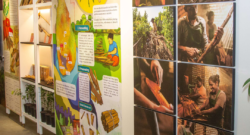
Yes, that’s right, an interactive space in the heart of Colombo just opened to learn about the history, culture, biodiversity, and global influence of Ceylon Tea and Ceylon Cinnamon – thanks to Genesis by Dilmah. The Ceylon Tea & Cinnamon Experience at Genesis by Dilmah opened its doors with a bold ambition: to redefine the way visitors experience two of Sri Lanka’s most iconic natural treasures – Ceylon Tea and Ceylon Cinnamon. Located in bustling Maligawatte in the capital of Colombo, Sri Lanka, the Experience is a unique curated journey to better understand and appreciate these two legendary exports. Developed under the Genesis brand, the experience showcases Sri Lanka’s rich heritage while inviting both local and international audiences to rediscover Ceylon tea and cinnamon – not just as commodities, but as cultural artefacts with stories that span centuries. The location in Maligawatte is in fact the birthplace of Dilmah tea where the late Merrill J. Fernando first began to process the finest Ceylon Teas at source, making his dream of sharing single origin tea with the world into a reality. This significance and connection were emphasised by both his sons Dilhan and Malik who inaugurated the experiential space, in its “rebirth”. “This initiative represents a deeply personal and national story,” said Dilhan C. Fernando, Chairman, Dilmah Ceylon Tea Company PLC, of which Genesis by Dilmah is a part of. “This location in Maligawatte is where my father, Dilmah Founder Merrill J. Fernando first started processing and packing our teas for the world – 40 years ago in 1985. Ceylon Tea and Cinnamon are not merely Sri Lankan exports – they are expressions of our identity, our biodiversity, and our values. Genesis brings that story to life in a way that is meaningful, authentic and immersive.” The opening event was attended by representatives of the tourism sector and media, as well as Peter Kuruvita, renowned chef / restauranteur and longstanding friend of Dilmah, who shared the value of true and potent Ceylon Tea and Cinnamon for culinary professionals and budding cooks. Curated as a gallery-style walkthrough, the Experience is brought to life through interactive exhibits, high-resolution murals, original archival content, and multisensory installations. It draws a compelling line from ancient trade routes and colonial legacies to modern sustainability and innovation. As Sri Lanka gains global interest as a tourist destination, it is important for its capital city to build more multidimensional, authentic experiences and the Ceylon Tea & Cinnamon Experience at Genesis by Dilmah is a welcome addition to the offerings in Colombo. The Experience will soon be open for organised tours. Learn more by visiting Genesis by Dilmah
- 1
- 2