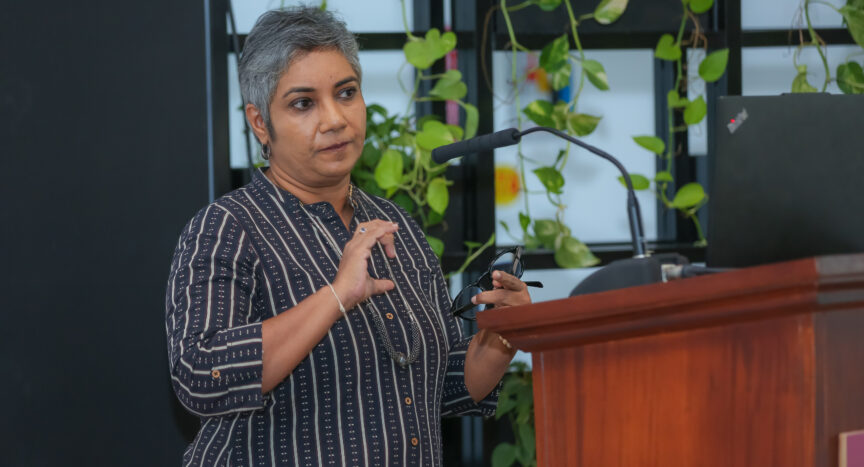
– with Award winning Archt. Sunela Jayewardene
What if the answer to some of our biggest urban challenges wasn’t hidden in expensive technology or imported ideas?
As our cities continue to grow, so do the pressures on housing, transport, water, energy, and green spaces. In response, we often turn to “smart” solutions. But in our pursuit of smart cities, have we forgotten something equally important – our natural capital?
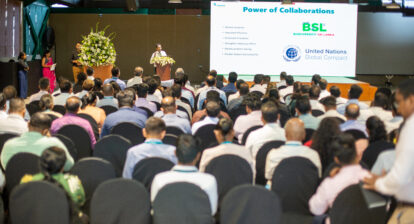
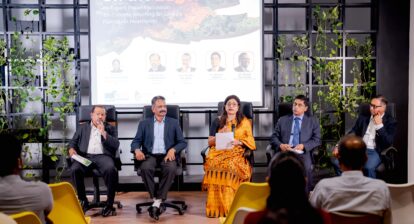
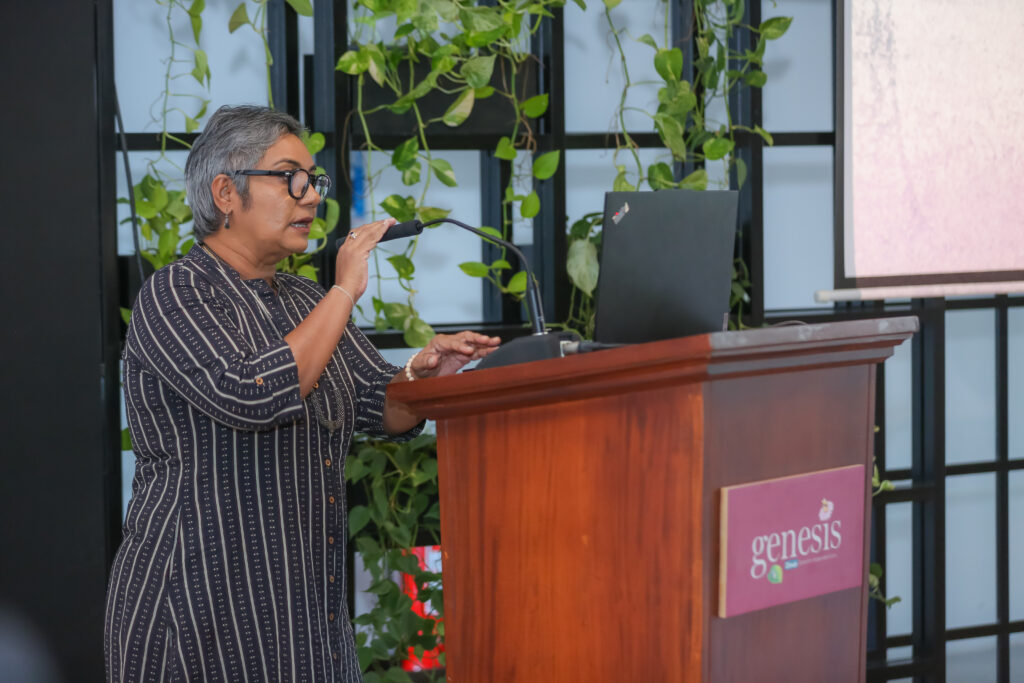
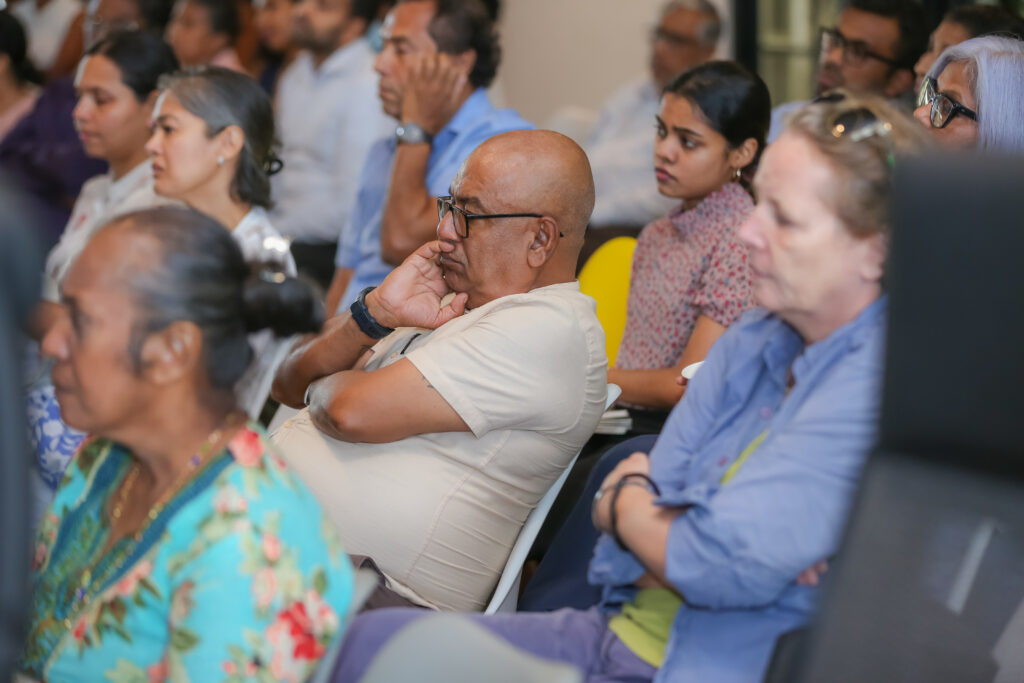
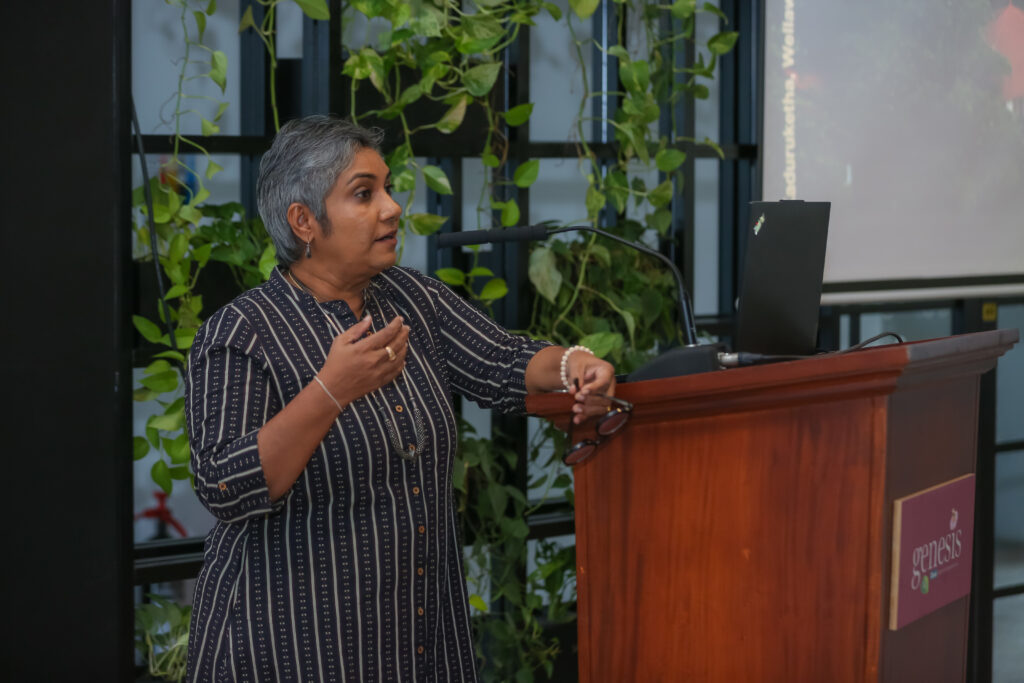
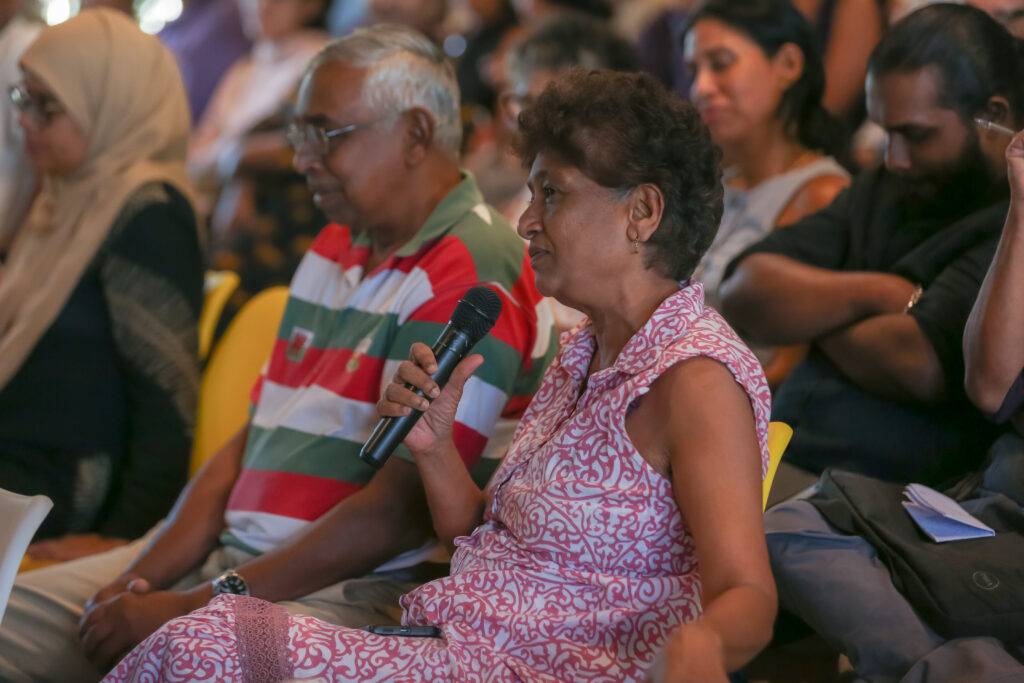
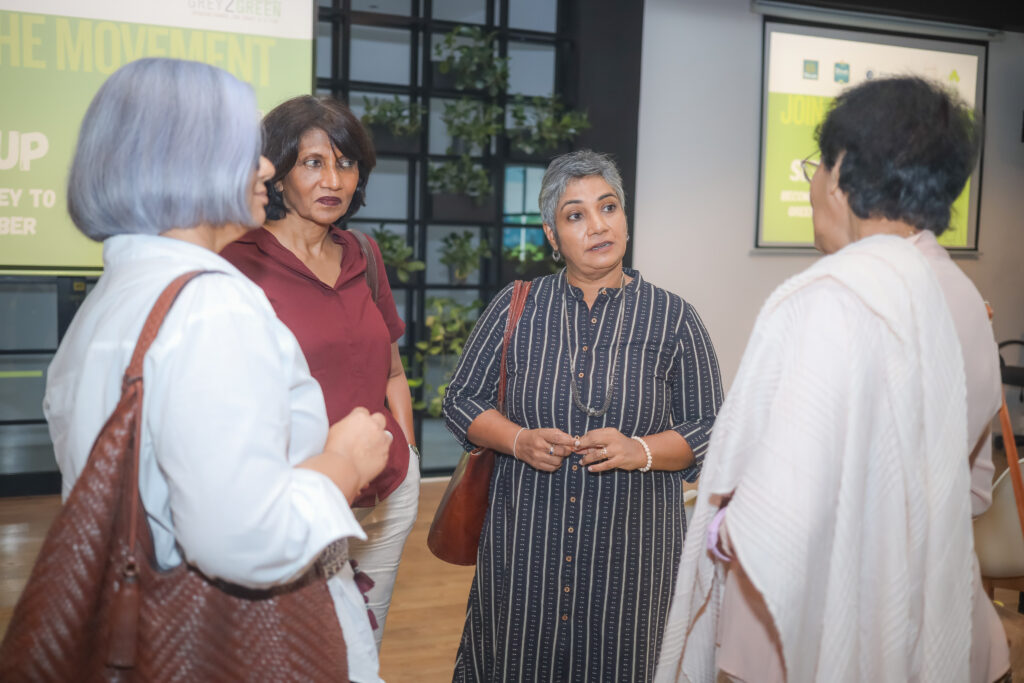
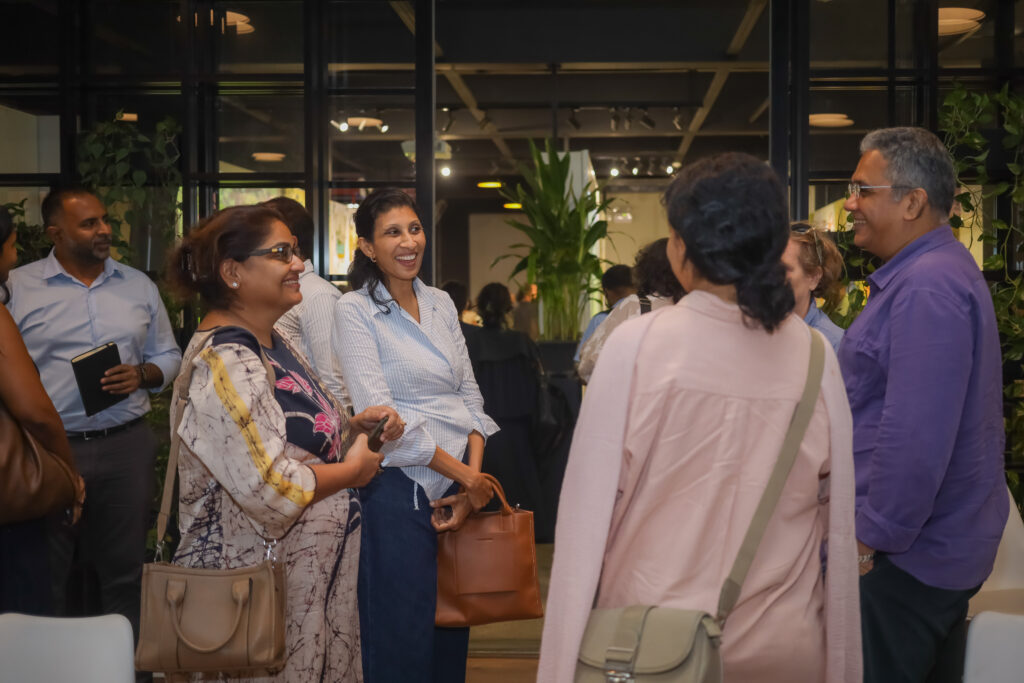
To further the conversation beyond concrete: Architecture for the Coexistence of Species, we welcomed award-winning architect Sunela Jayewardene to Genesis- Centre for a Sustainable Future, for a Thought Series session, which also marked the launch of our first Grey2Green Masterclass.
The session invited participants to rethink the relationship between design, nature, and the spaces we create.
The Balance We’ve Lost
For decades, urban development has largely focused on two forms of capital:
- Economic capital – growth, investments, and infrastructure.
- Social capital – communities, cultural and ethnic needs, and human wellbeing.
Yet the third pillar, natural capital, has often been treated as an afterthought.
Healthy ecosystems are not luxuries. They provide essential services – clean air, flood regulation, cooler temperatures, pollination, and spaces for recreation and wellbeing. Good design should therefore seek to maximise these ecosystem services rather than minimise nature’s role.
Let the Land Speak
Every place has its own story. Its climate, soils, topography, biodiversity, and culture are unique. This means one important thing:
Context should decide the design.
Rather than forcing landscapes to fit a trend, we need to ask:
- What already exists here?
- What species naturally belong here?
- How can we work with nature instead of against it?
The best interventions are often the gentlest ones – those that create minimal impact on the land and give back as much as they take.
Sometimes Nature Knows Best
One of the most powerful ideas in ecological design is passive rewilding, allowing nature to recover naturally with little or no human intervention. Left alone, ecosystems often have an incredible ability to heal themselves. Plants return. Wildlife follows. Ecological processes restart.
As designers of the spaces we inhabit, our role is not to control nature, but to create the conditions that allow it to flourish. The future we build must be one that is shaped with nature, not around it.