
Author: Nathasha Silva
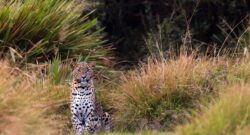
Coexisting with the Apex Predator: Safeguarding Sri Lanka’s Leopards at Queensberry Estate
Every year on August 1st, Sri Lanka celebrates National Leopard Day, a day dedicated to honouring our island nation’s ultimate apex predator, the Sri Lankan leopard (Panthera pardus kotiya). Unlike leopards in Africa or mainland Asia, Sri Lanka’s subspecies sits at the absolute top of the food chain, with no competing big cats like lions or tigers to share its kingdom. Because of this unique ecological position, Sri Lanka boasts one of the highest leopard densities in the world. Yet, these majestic big cats do not only roam protected national parks like Yala or Wilpattu, they also navigate shared, human-dominated working landscapes, including the lush tea gardens of the Central Highlands. Understanding and protecting these elusive creatures within working environments is essential for their long-term survival. That is why Dilmah Conservation in collaboration with leopard researcher Sethil Muhandiram of Leopocon Sri Lanka has launched a pioneering leopard conservation project at Queensberry Tea Estate in Nawalapitiya. The Island’s Unique Big Cat: Fast Facts Before diving into our estate initiatives, here is why the Sri Lankan leopard is so extraordinary: Bridging Science and Community at Queensberry Estate Nestled in the Nawalapitiya highlands, Queensberry Estate is part of a crucial ecosystem where forest patches meet agricultural land. To ensure leopards and human communities can safely share this environment, our initiative focuses on three core pillars: Through our valuable partnership with Leopocon Sri Lanka, this initiative creates a model for how commercial agriculture and wildlife conservation can work hand-in-hand. As we commemorate National Leopard Day, Sethil Muhandiram, Principal Researcher of the project, shares his perspective on the work being done on the ground: “Field-based conservation demands both scientific rigour and genuine engagement with communities. The Queensbery Estate initiative reflects a careful balance of both. By combining systematic monitoring with on-the-ground collaboration, it advances a practical understanding of how leopards persist within working landscapes. Equally important is its commitment to reducing conflict through awareness, early detection of threats, and trust-building among estate communities and conservation practitioners. Such efforts are essential if coexistence is to move from concept to reality. Partnerships of this nature, particularly with committed actors such as Dilmah Conservation, play a vital role in strengthening conservation outcomes in Sri Lanka. They create space for applied research that is both locally grounded and nationally relevant. This work stands as a meaningful contribution toward securing the future of Sri Lanka’s leopard populations within shared landscapes.” Looking Forward: Coexistence as a Reality True conservation does not mean separating wildlife from people behind high fences; it means learning how to share the landscape safely and respectfully. This National Leopard Day, we celebrate not only the grandeur of Panthera pardus kotiya, but also the dedicated estate workers, researchers, and partners who work every day to turn peaceful coexistence from a concept into a daily reality.

Rethinking the Build
– with Award winning Archt. Sunela Jayewardene What if the answer to some of our biggest urban challenges wasn’t hidden in expensive technology or imported ideas? As our cities continue to grow, so do the pressures on housing, transport, water, energy, and green spaces. In response, we often turn to “smart” solutions. But in our pursuit of smart cities, have we forgotten something equally important – our natural capital? To further the conversation beyond concrete: Architecture for the Coexistence of Species, we welcomed award-winning architect Sunela Jayewardene to Genesis- Centre for a Sustainable Future, for a Thought Series session, which also marked the launch of our first Grey2Green Masterclass. The session invited participants to rethink the relationship between design, nature, and the spaces we create. The Balance We’ve Lost For decades, urban development has largely focused on two forms of capital: Yet the third pillar, natural capital, has often been treated as an afterthought. Healthy ecosystems are not luxuries. They provide essential services – clean air, flood regulation, cooler temperatures, pollination, and spaces for recreation and wellbeing. Good design should therefore seek to maximise these ecosystem services rather than minimise nature’s role. Let the Land Speak Every place has its own story. Its climate, soils, topography, biodiversity, and culture are unique. This means one important thing: Context should decide the design. Rather than forcing landscapes to fit a trend, we need to ask: The best interventions are often the gentlest ones – those that create minimal impact on the land and give back as much as they take. Sometimes Nature Knows Best One of the most powerful ideas in ecological design is passive rewilding, allowing nature to recover naturally with little or no human intervention. Left alone, ecosystems often have an incredible ability to heal themselves. Plants return. Wildlife follows. Ecological processes restart. As designers of the spaces we inhabit, our role is not to control nature, but to create the conditions that allow it to flourish. The future we build must be one that is shaped with nature, not around it.

Looking to the Past to Water the Future
When we think of climate action, our minds often jump to new technologies, innovations, and modern solutions. But sometimes, the answers we need have been with us all along. This World Environment Day, under the theme “Climate Action” and the focus “Inspired by Nature. For Climate. For Our Future,” we turned to something deeply rooted in Sri Lanka’s own heritage. An Ancient Solution for a Modern Challenge Across Sri Lanka’s dry zones, farmers are facing increasingly unpredictable weather. Longer dry spells, rising temperatures, and water scarcity are making it harder to grow crops and sustain livelihoods along with climate change. In response, we looked back to an indigenous farming practice that has quietly stood the test of time: pitcher irrigation. Traditionally used in home gardens and dry-zone agriculture, these self-watering clay pots offer a simple yet remarkably effective way to provide crops with a steady supply of water, even during harsh conditions. To help communities adapt to the challenges of a changing climate, we distributed these indigenous irrigation pots among farmers in the East, supporting the cultivation of crops such as cashew and chilli in areas most vulnerable to drought. How Does It Work? The concept is surprisingly simple. Unglazed, porous clay pots are buried neck-deep in the soil, leaving only the opening visible above ground. Once filled with water, the pot slowly releases moisture through its porous walls directly into the surrounding soil. The magic lies in its simplicity. As the soil dries, water seeps out to replenish moisture around the roots. When the soil is already moist, the seepage slows or stops naturally. This means plants receive water when they need it, and only when they need it. No complicated technology. No pumps. No timers. Just a system that works in harmony with nature. Why Is It So Effective? Imagine watering a plant with a bucket. Not all the water reaches the roots. Some evaporates. Some runs off. Some seeps too deeply into the ground. Many of us tend to overwater plants without realizing it. Too much water can be just as harmful as too little, leading to weak roots, disease, and wasted resources. Pitcher irrigation changes that. It removes much of that guesswork, allowing water to be delivered gradually and efficiently, exactly where it is needed. This is a reminder that climate action does not always require reinventing the wheel. Sometimes, it means rediscovering the wisdom that already exists around us.
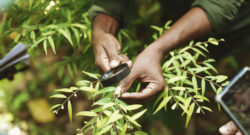
Learning to ‘See’ plants
Not as passive background scenery but as dynamic communicative organisms The plant world is one of endless diversity, existing in forms, colours, textures, and structures so varied that understanding them can feel like learning an entirely new language. Yet despite this incredible diversity, every plant has a place, a relationship, and a story. This is where taxonomy comes in. Often misunderstood as simply the act of “naming plants,” taxonomy is far more than classification. It is the science of understanding relationships between plants, tracing their evolutionary histories, identifying their characteristics, and organising the immense diversity of life into meaningful systems. Nomenclature, meanwhile, refers specifically to the process of naming. Together, they form the foundation of how we understand the plant world around us. All of this and more unfolded at our recent Plant Identification Workshop held in Moratuwa, which drew an overwhelming number of enthusiastic participants. The response itself reflected a growing curiosity among people to better understand the green world around them, not merely as scenery, but as living systems filled with complexity and connection. The session was led by Dr. Himesh Jayasinghe, an emerging plant expert whose passion and depth of knowledge brought the subject to life. “Plant identification requires more than memorisation; it demands a trained eye, scientific understanding, patience, and an instinct for observation. Dr. Himesh possesses exactly that combination”. -Prof. Hashendra Adding another layer of depth to the workshop, Prof. Hashendra’s session beautifully connected science with history, showing participants how plant identification is rooted not only in modern scientific methods, but also in centuries of exploration, documentation, and discovery. Without understanding both the scientific and historical context, identifying plants becomes incomplete. With her support, microscopes were also arranged for participants, allowing them to move beyond surface-level observation and explore the intricate details hidden within plants. Delicate structures, textures, and patterns that often go unnoticed to the naked eye suddenly became visible, transforming the session from a lecture into an immersive exploration of the microscopic beauty of the plant world. The learning experience continued outdoors as participants were divided into six groups and guided through the premises’ arboretum, organic garden, and butterfly garden. These guided walks turned the environment itself into a living classroom, allowing participants to apply what they had learned in real time while observing plants within their ecological settings. The activity concluded with flower dissections, offering an even deeper understanding of plant morphology and structure. Adding a fun and interactive touch to the workshop was the Mentimeter quiz session. By the end of the workshop, participants walked away with far more than the ability to identify plants. What many once saw as “just plants” had transformed into intricate living systems filled with history, science, relationships, and wonder. Curiosity had been reignited, perspectives had shifted, and the plant world was now being seen through entirely new eyes.
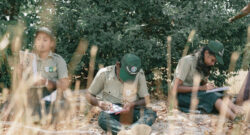
A New Generation of Nature Lovers in Kalkudah
On the 1st of May, the Central Environmental Authority and Dilmah Conservation came together to launch the Sobha Mithuro Kalkudah Nature Club at our East Centre. Over 100 students from schools across the Batticaloa district joined the initiative, marking the beginning of what we hope will become a long-term journey in environmental stewardship. What is ‘Sobha Mithuro’? ‘Sobha Mithuro’ is a community-based environmental initiative that inspires children and youth to become environmentally conscious citizens through nature education, conservation activities, and sustainable lifestyle practices. The objective is to bridge the gap in environmental education on climate change, water conservation, and biodiversity. One of the most memorable moments came from Dr. Ajith Gunawardena, Director of Environmental Education at the Central Environment Authority, and his daughter, Ms. Mihini Akithma, who encouraged students to truly observe nature in order to love and protect it. Their advice was beautifully practical – keep a nature diary. And so, surrounded by the trees of our dry zone arboretum, the students made their very first diary entries. The most evocative observations received certificates, while every participant walked away with a recycled-plastic-covered nature diary to continue documenting the world around them. What began as a single launch is now set to grow into monthly meetups at the Dilmah Conservation Centre- Kalkudah and participating schools, creating a space where curiosity, science, and nature can meet.
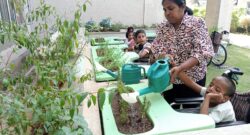
A Garden for Everyone: Growing Inclusion
At the One Earth Centre in Moratuwa, a wheelchair-accessible garden is quietly redefining what it means to connect with nature. Built with intention and care, this garden isn’t just about plants – it’s about people. It’s about making sure that everyone, regardless of ability, has the chance to feel, touch, grow, and belong. Created especially for the Rainbow Kids of the MJF Charitable Foundation, this space recognises something simple yet often overlooked: they deserve to experience nature just as fully as anyone else. And here, they do. Small hands reach out to touch leaves, to water plants, to watch something they nurtured come to life. There’s curiosity, there’s excitement, and there’s a quiet sense of pride. This is made possible through thoughtfully designed adjustable planting tables at suitable heights, barrier-free access for easy movement in and out of the space, and the continued support of our staff and their parents who are also welcomed at the garden here. But what makes this garden even more special is what happens next. What is grown here doesn’t stop at the garden. The harvest is shared with the Women’s Development Centre, where it becomes part of meals prepared with care. And then, in a beautiful full circle, it returns – served back on their plates. A full circle of kindness to nature, among people and back from nature!
Life to Our Blue Forests
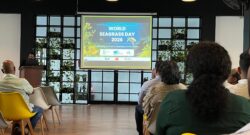
We often speak about forests when we talk about protecting the planet. Towering trees, dense canopies, and the life they hold. But beneath the surface of our oceans lies another ecosystem – quiet, unseen, and just as powerful. Seagrass. Seagrass meadows are now recognised as the third most important ecosystem in the world, following forests and other major natural systems. Yet, unlike forests, they remain largely invisible to us. And maybe that’s why we are losing them. A climate hero we rarely see Seagrass is more than just underwater plants. It is: Despite all this, seagrass ecosystems are disappearing at an alarming rate. What’s causing the loss? The degradation of seagrass meadows is often silent, but steady. It happens through: Unlike forests, where loss is visible and immediate, seagrass decline happens underwater – out of sight, and often out of mind. This is exactly why conversations like these are becoming more important. At a recent session organised by Biodiversity Sri Lanka (BSL) in collaboration with Dilmah Conservation at Genesis by Dilmah, Maligawatte, the focus turned to “Life to Our Blue Forests” – the newest addition to a growing series of conservation initiatives. This builds on earlier efforts: Life to our mangroves, Life to our national parks, Life to our beaches, Life to our coral reefs, Life to our forests And now, the spotlight shifts to what lies beneath the waves. A collaborative step forward The Life to Our Blue Forests initiative emerges as a collaboration with Dilmah Conservation, bringing together knowledge, science, and action to protect these critical ecosystems. The session opened with a keynote by Prof. Mike Van Keulen from Murdoch University, who spoke on “Seagrass: The hidden climate hero beneath the waves.” His insights reinforced just how vital these ecosystems are, not only for marine life, but for global climate resilience. This was followed by local expertise from Mr. Susantha Udagedara of Blue Resources Trust, who grounded the discussion in the Sri Lankan context, highlighting both the richness of our coastal ecosystems and the urgency of protecting them. Looking ahead We are speaking more about seagrass now than ever for two simple reasons: Because it is important.And because it is time. Time to recognise that not all forests grow on land.Time to protect ecosystems we cannot always see.And time to act before silence beneath the waves becomes absence.
It’s Living Green When Animals Join In
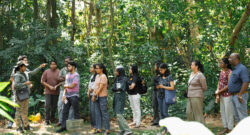
Grey2Green just wrapped up its 3rd session, and this time, we looked beyond just “green.” Because let’s be honest…Is a space truly green just because it has plants? Plants are alive, yes. But what really brings a space to life is something more subtle – the movement, the sounds, the tiny interactions we often miss. The flutter of wings, the hum of insects, the quiet work happening in the soil. Animals don’t just make spaces feel lively – they make them function. From pollination and seed dispersal to decomposition and natural pest control, they are what keep ecosystems in balance. And yet, not every green space supports this life.Not every garden feels inviting. So, how do we create spaces that animals actually choose to be part of? Seeing the Difference With insights from Dr. Sahani Chandrasiri and Dr. Anura Indrajith, we explored this question not just through discussion, but through experience. A walk through the arboretum and butterfly garden showed us something simple, but powerful:Not all green spaces are equal. Some are quiet.Some are alive. The difference lies in the details – the kind of plants, the layers, the care taken to welcome more than just human eyes. So, How Can You Make Your Space Animal-Friendly? If you have even a small garden, balcony, or patch of land, here are a few simple ways to start: 1. Choose native plantsThese are what local insects, birds, and animals already know and depend on. Exotic plants may look nice, but natives create real connections. 2. Create layers, not just lawnsThink beyond a flat green space. Add ground plants, shrubs, and small trees. Different animals use different levels. 3. Let it be a little “messy”A few fallen leaves, twigs, or logs might look untidy, but they are homes for insects and help enrich the soil. 4. Add a water sourceEven a shallow bowl can attract birds, butterflies, and bees especially in dry weather. 5. Avoid chemicalsPesticides and herbicides don’t just remove pests, they remove the entire food chain. 6. Plant for pollinatorsFlowering plants that bloom at different times ensure there’s always something for bees and butterflies. A Quick Re-cap! So far, through our skill building sessions, we’ve explored what urban greening really means, how to choose the right plants, and how to create spaces that welcome animal life. These are just the first steps in our skill-building journey. Stay tuned for what’s next.